
Savica Waterfall is one of the most beautiful starting points for high-mountain hiking in the Julian Alps. The route suggested here is technically easy, yet it leads hikers through one of the most scenic and fascinating parts of Triglav National Park.
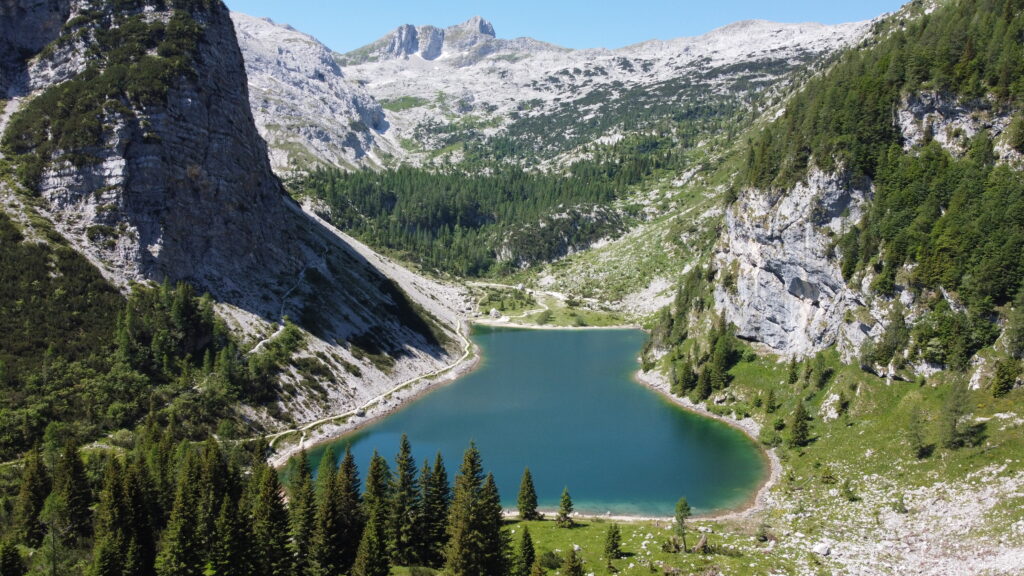
Along the way you will cross the remote Komna Plateau and visit Mrzla Komna, the coldest recorded place in Slovenia, where temperatures once dropped to −49°C. The trail also passes all three lakes of the Krn Lakes and reveals numerous historical remains from World War I and the period of the Rapallo border.
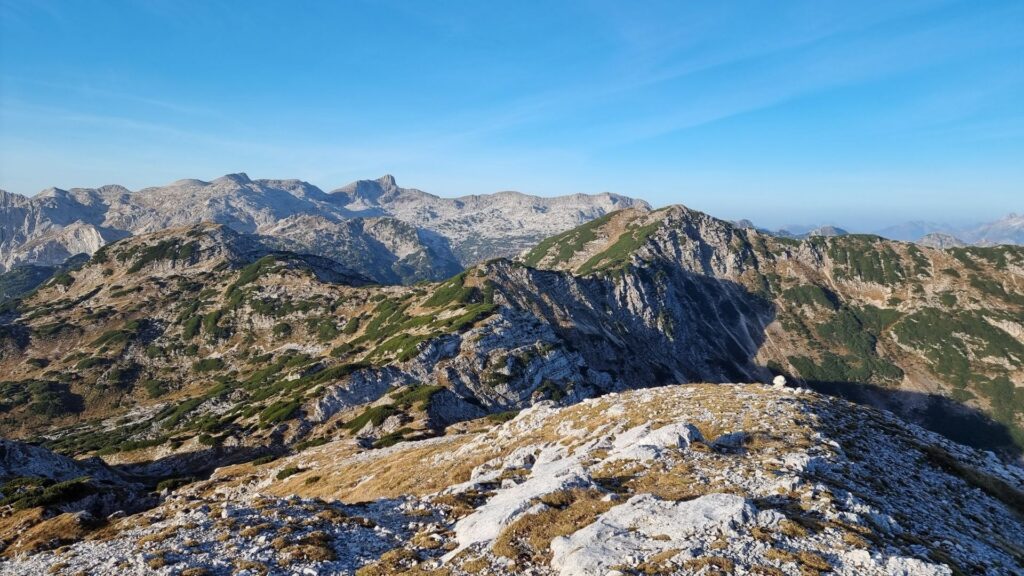
Above all, this hike offers an unforgettable experience of pristine alpine nature, spectacular mountain views, and long stretches of peaceful, often surprisingly quiet trails.
The Krn mountain range and the Komna Plateau are true hiking gems of the Julian Alps. Their wild beauty, combined with the traces of dramatic history scattered across the landscape, makes this journey particularly unique and memorable.
- Starting point: parking area at Savica Waterfall (46.289, 13.802)
- Distance: 42,5 km
- Elevation gain: 2500 m
- Duration: 2–3 days (approx. 17 hours of hiking)
- Difficulty: Easy
- Best season: Summer and autumn
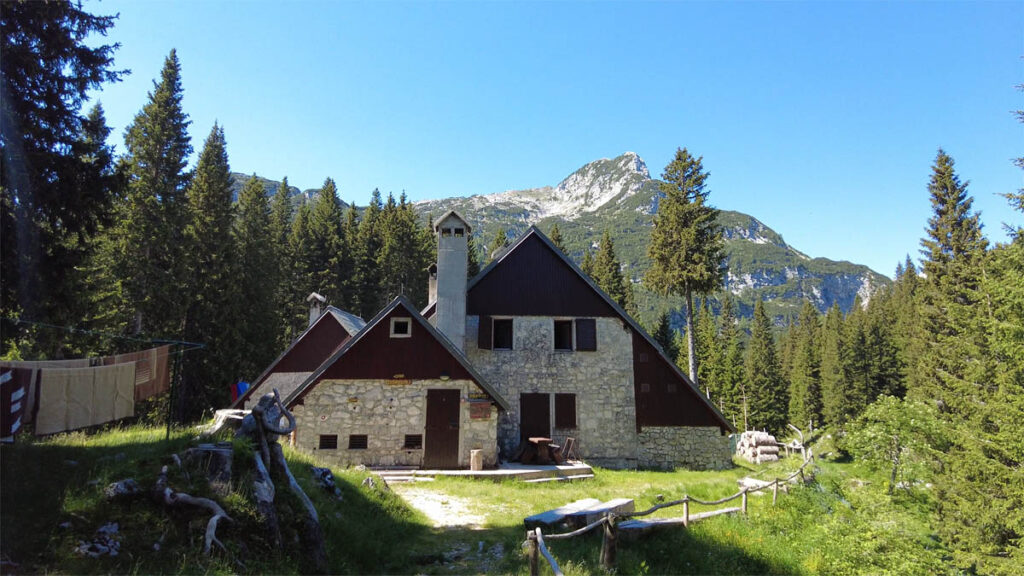
- Recommended overnight stay: Koča pod Bogatinom or Dom pri Krnskih jezerih
- Highlights: Mrzla Komna, Krn lake, Lake in Lužnica, Dupelj lake, remains of the barracks behind Lepočami, Krn, Batognica, Pyramid
This scenic loop hike begins at the parking area at Savica Waterfall and follows well-maintained mountain trails that were originally built during World War I to supply Austro-Hungarian soldiers stationed in the mountains.
After around two and a half hours of moderate ascent, you reach the beautiful Komna Plateau and the mountain hut Koča pod Bogatinom, where I recommend spending the night.
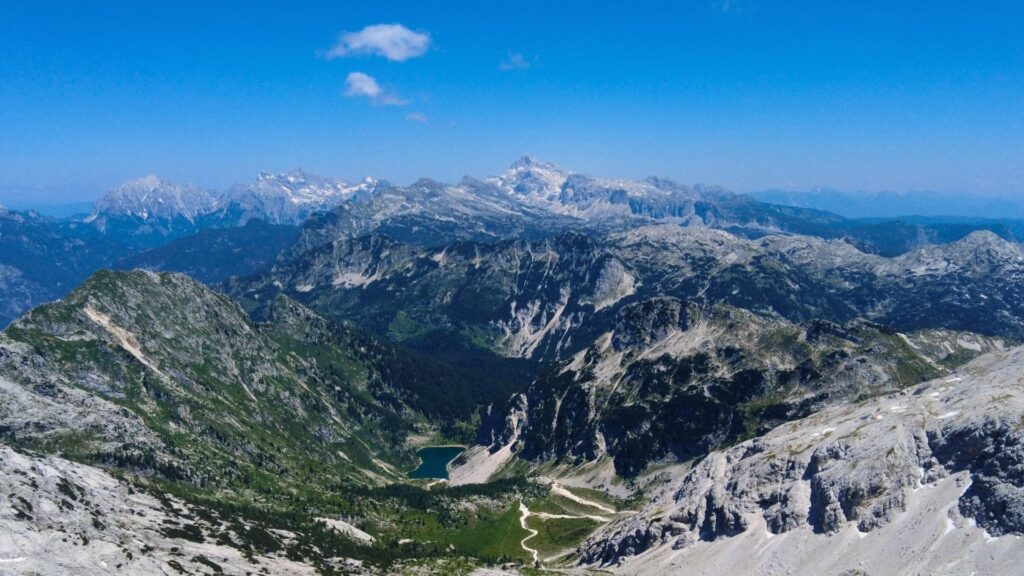
Early the next morning, continue across the karst plateau of Mrzla Komna — the coldest recorded place in Slovenia, where temperatures dropped to −49°C in 2009 — and hike toward Lanževica (2003m).
If you prefer to stay on clearly marked trails, it is best to return to the nearby saddle and continue toward Bogatin saddle before descending toward Krn lake.
More adventurous hikers who don’t mind a short off-trail section can continue toward Velika Baba and reconnect with the marked trail below its summit before heading to Dom pri Krnskih jezerih and nearby Dupelj lake.
Your next stop is the stunning Krn lake, the largest alpine lake in Slovenia. From here you can continue toward Mount Krn, although you also have the option to turn back toward Bogatin saddle if you want to shorten the route.
On the way to the summit you will reach Krnska Škrbina before climbing to the 2,244-metre peak of Mount Krn, one of the most spectacular viewpoints in the western Julian Alps.
The trail then continues past the small shelter near the summit and across Batognica, a peak with a fascinating history from World War I. During the war, soldiers detonated around 5,000 kilograms of explosives, lowering the summit by several metres.
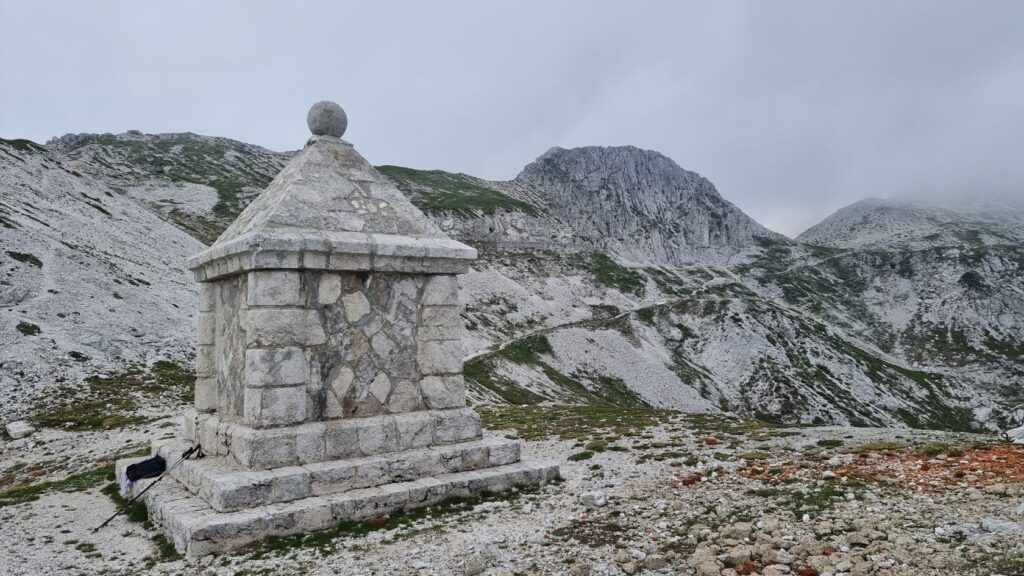
From there the path leads past the peak called Vrh nad Peski and Piramida before descending toward Prehodci.
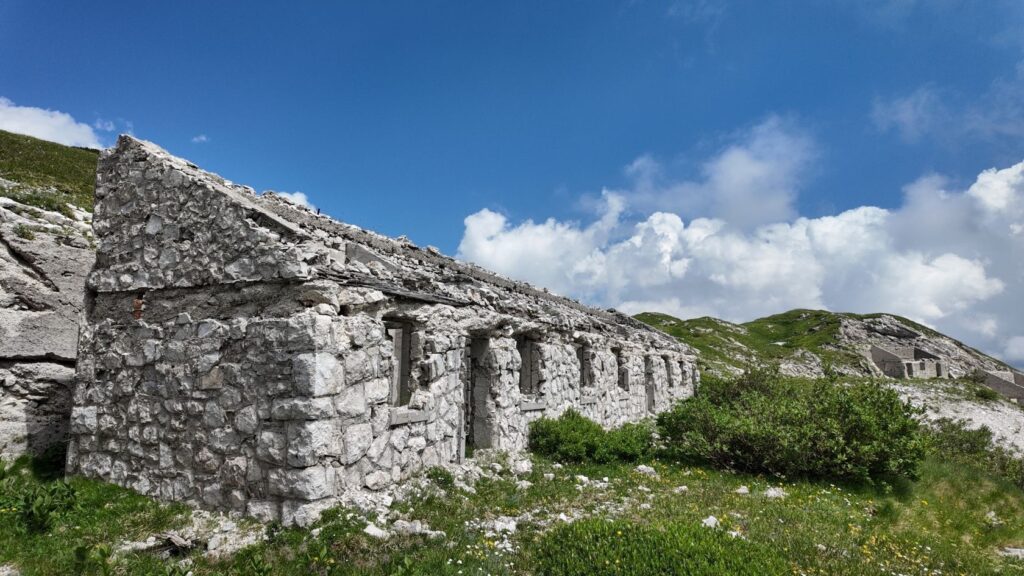
From Prehodci the trail continues toward za Lepočami, where you can see the remains of a former military barracks from the time of the Treaty of Rapallo. This was once the largest Italian military barracks in the Slovenian Alps, built to guard the border between the Kingdom of Italy and the Kingdom of Yugoslavia.
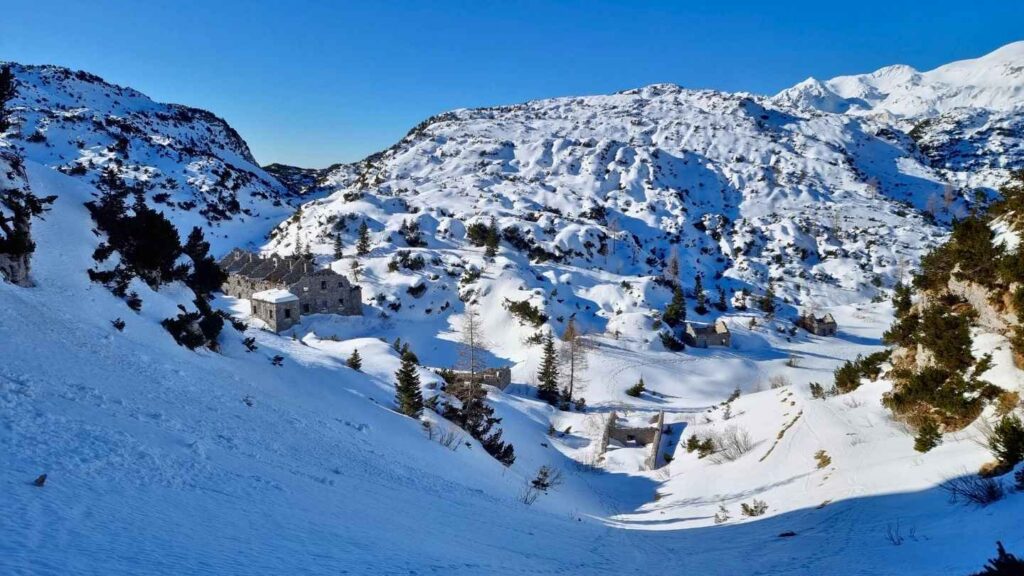
Around the former barracks you can still find several underground bunkers and military tunnels, some of which can still be explored today. The border between the two countries followed the main watershed ridge, which runs across Bogatin Saddle.
From here the trail climbs back toward Bogatin Saddle, after which about one more hour of descent leads you back to Koča pod Bogatinom, and eventually down to the starting point near Savica Waterfall.
You can find even more similar tours in the article that presents the 9 most beautiful hiking trails in Triglav National Park.


